Welcome to the official website of Ningtai Electric


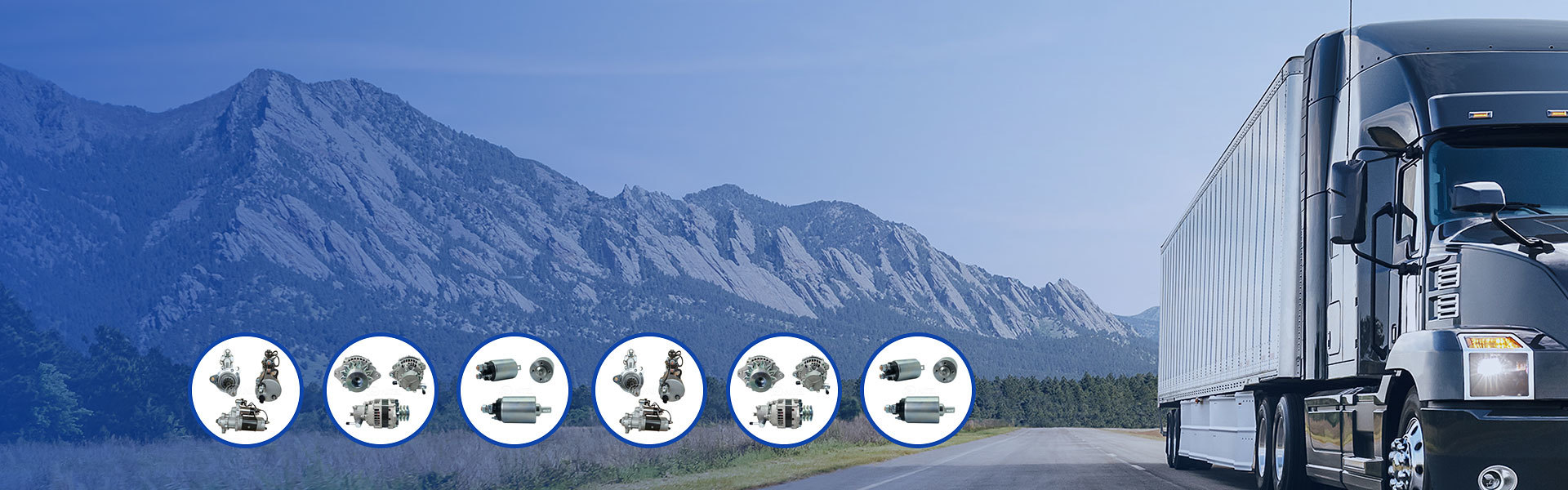
How to choose a reliable truck starter motor supplier in China: a practical guide
Release time:
2026-10-06
Author:
Ningtai Electric Motor
Source:
Article overview
This guide is written for Turkish commercial vehicle parts importers and procurement managers who are actively evaluating Chinese suppliers for truck starter motors. You will find supplier comparison data, certification checklists, pricing benchmarks, and practical red flags — all updated for 2026.
Table of contents
- 1. What is a truck starter motor supplier in China?
- 2. Why Turkish importers are turning to Chinese suppliers in 2026
- 3. Key certifications and quality standards to verify
- 4. How to evaluate product compatibility and technical specifications
- 5. Comparing top supplier types: OEM factory vs. trading company
- 6. Pricing, MOQ, and lead time: what to expect
- 7. Red flags and common mistakes to avoid
- 8. FAQ
What is a truck starter motor supplier in China?
A truck starter motor supplier China refers to a manufacturer or exporter based in China that produces and supplies starting motors designed for heavy-duty commercial vehicles, serving both OEM assemblers and global aftermarket distributors. These suppliers range from large integrated factories with annual outputs exceeding one million units, to smaller specialized workshops focused on specific engine platforms.
China's role in this segment is substantial. According to industry estimates, Chinese manufacturers account for roughly 35–40% of the global aftermarket share for commercial vehicle starter motors — a dominance built on scale, tooling investment, and increasingly competitive quality standards. For Turkish automotive parts importers, this makes China the default first stop when sourcing replacement or upgrade components for diesel-powered fleets.
The different supplier categories you will encounter
Not every entity calling itself a "supplier" is a manufacturer. In China's automotive parts ecosystem, you will typically encounter three distinct types. The first is the OEM starter motor factory — a facility that produces components directly for vehicle assemblers and also sells identical parts into the aftermarket. The second is the aftermarket-focused manufacturer, which produces compatible replacements without necessarily holding OEM contracts. The third is the trading company, which sources from multiple factories and provides consolidation and logistics services. Each has a different risk and value profile, which we examine in detail in section five.
Product types covered by Chinese suppliers
The product range from a typical heavy duty starter motor manufacturer in China covers direct-drive starters for lighter trucks, gear-reduction starters for high-torque diesel applications, and permanent-magnet starters increasingly used in hybrid commercial vehicles. Among Turkish importers, the most requested items are 24V truck starter motors — compatible with European-spec vehicles running on 24-volt electrical systems — and Bosch compatible starter motors from China, given the widespread use of Bosch-spec ignition systems across the Turkish truck fleet.
Why Turkish importers are turning to Chinese suppliers in 2026
The answer is not simply price. It is the convergence of price, availability, and improving certification standards that has made Chinese automotive parts distributors attractive to Turkish buyers. In 2026, the Turkish commercial vehicle market is navigating both fleet expansion and cost pressure — fuel prices remain elevated, and fleet operators are extending vehicle lifespans rather than replacing trucks. This drives demand for aftermarket truck electrical parts, and Chinese suppliers are well-positioned to fill that gap.
The cost advantage is real, but not infinite
A 24V gear-reduction starter motor for a Volvo FH series truck sourced from a certified Chinese OEM factory typically lands at Turkish customs at 40–60% below the equivalent European-branded replacement part. On a bulk order of 200 units — a realistic quantity for a mid-size Istanbul parts distributor — this translates to savings in the range of €15,000–€25,000 per shipment. That is not marginal. It is transformative for working capital.
Why do many procurement managers still hesitate? The concern is quality consistency across batches, and the difficulty of verifying supplier claims remotely. Both are legitimate concerns, which is precisely what the certification and evaluation framework in the following sections is designed to address.

2026 market dynamics affecting supply and demand
The 2026 landscape includes two trends that Turkish importers should factor into their sourcing strategy. First, the rise of 48V mild-hybrid commercial vehicles in Europe is beginning to filter into Turkey's premium fleet segment, creating new demand for high-power, fast-response starter motors — a category where Chinese investment has accelerated sharply. Second, supply chain transparency requirements from European customers are pushing Chinese suppliers to adopt carbon footprint reporting and raw material traceability documentation, which indirectly benefits Turkish importers who resell into EU-adjacent markets.
Key certifications and quality standards to verify
Certifications are the single most reliable proxy for quality when you cannot inspect a factory in person. A credible truck starter motor supplier in China should hold, at minimum, IATF 16949 (formerly ISO/TS 16949) — the international standard for automotive quality management systems. Beyond that, look for ISO 9001 as a baseline, and CE marking if the product is destined for European-standard markets including Turkey.
What IATF 16949 actually means for your purchase
IATF 16949 is not simply a paper exercise. Achieving this certification requires a factory to implement documented process controls for every stage of production — from copper wire winding to final torque testing. In practical terms, a diesel engine starter motor exporter holding this certification is statistically far less likely to ship batches with inconsistent brush contact pressure or substandard armature insulation. Based on real procurement case reviews, return rates from IATF-certified Chinese suppliers average 1.2–2.5%, compared to 6–12% from uncertified sources.
Additional certifications relevant to the Turkish market
Turkey's customs and import framework increasingly aligns with EU technical standards. For truck ignition components supplier imports, TSE (Türk Standartları Enstitüsü) compatibility is worth verifying, particularly for parts entering the domestic retail market. For exporters with OEM-level ambitions, look for suppliers who can provide PPAP (Production Part Approval Process) documentation — this is standard practice among serious OEM starter motor factories and signals a supplier capable of meeting tier-one automotive requirements.
"The gap between a certified Chinese automotive supplier and a European branded equivalent has narrowed significantly over the past decade. In the starter motor segment specifically, IATF-certified Chinese manufacturers are producing components that meet or exceed OEM dimensional and performance tolerances." — Industry consensus drawn from multiple supply chain audit reports, 2025–2026.
How to evaluate product compatibility and technical specifications
Compatibility is where procurement decisions most commonly go wrong. A starter motor is a precisely engineered component — mounting flange geometry, pinion tooth count, engagement direction, and voltage must all match the target engine. Getting this wrong does not just mean a non-functioning part; it can mean engine damage.
The cross-reference approach
Reputable Chinese commercial vehicle starter motor suppliers maintain comprehensive cross-reference databases. When evaluating a supplier, request their cross-reference catalogue for the specific brands in your fleet — if you operate Volvo, DAF, or MAN trucks, ask explicitly for starter motor for Volvo trucks listings, or their equivalent cross-references for DAF XF and MAN TGX. A supplier who cannot provide this documentation immediately is a supplier who is not prepared for professional B2B procurement.
The key parameters to validate for any 24V truck starter motor are: rated voltage (24V for European commercial vehicles), power output in kilowatts (typically 4.0 kW–7.5 kW for heavy trucks), number of pinion teeth (most common: 9 or 10 teeth), mounting hole pattern, and rotation direction. A mismatch on any single parameter means the part will not function correctly.
Requesting test reports and samples
Before committing to a bulk starter motor import from China, always request a sample shipment — typically 2 to 5 units. A reliable automotive starting system supplier will have no objection to this. Test the samples on actual vehicle platforms under load conditions, not just bench tests. Check for noise level during cranking, engagement speed, and heat buildup after repeated starts in succession. These real-world tests reveal far more than a factory datasheet.
Comparing top supplier types: OEM factory vs. trading company
This is a question every serious importer eventually faces. Should you source directly from an OEM starter motor factory, or work through a Chinese auto parts distributor? Both have legitimate roles in the supply chain, but the right choice depends on your order volume, technical requirements, and risk tolerance.
| Criteria | OEM factory (direct) | Trading company | Aftermarket manufacturer |
|---|---|---|---|
| Minimum MOQ | 200–500 units | 50–100 units | 100–300 units |
| Price per unit (24V, 5.5 kW) | €28–€42 | €34–€52 | €22–€36 |
| Certification availability | IATF 16949, PPAP | Varies by factory sourced | ISO 9001, sometimes IATF |
| Lead time (FOB Shanghai) | 30–45 days | 15–25 days | 25–40 days |
| Custom labeling / OEM branding | Yes, with MOQ | Limited | Yes, flexible |
| Best for | High-volume importers, strict QC | Mixed product importers, low MOQ | Price-sensitive aftermarket |
When a trading company actually makes sense
Here is a point many procurement guides overlook: for a Turkish importer ordering mixed SKUs — say, starter motors alongside alternators, solenoids, and other aftermarket truck electrical parts — a reputable Chinese auto parts distributor can consolidate shipments and handle customs documentation more efficiently than dealing with four separate factories. The per-unit cost is slightly higher, but the logistics savings and reduced management overhead often more than compensate. Of course, this logic reverses when your volume on a single SKU exceeds 300 units per order.
The reliable solenoid supplier question
A reliable starter solenoid supplier is not always the same entity as your starter motor supplier. The solenoid is a separate sub-component and some importers source it independently for quality control reasons. In practice, the most efficient approach for Turkey-bound shipments is to source complete starter motor assemblies — solenoid included — from a single certified manufacturer, ensuring that the mating tolerances between the solenoid and motor housing are factory-matched.
Pricing, MOQ, and lead time: what to expect
One of the most common frustrations for first-time importers is the gap between the price quoted on Alibaba and the actual landed cost in Istanbul. Let us close that gap with realistic numbers.
Understanding the full landed cost
A 24V truck starter motor quoted at €30 ex-factory in Zhejiang will cost approximately €46–€54 by the time it clears customs at Mersin or Istanbul. The additions include sea freight (LCL for small orders adds proportionally more cost), Turkish import duty on automotive parts (currently around 4.5% for most HS codes in this category), VAT at 20%, and customs clearance fees. Working with a freight forwarder who has experience on the China–Turkey corridor is not optional — it is essential for accurate cost planning on China truck parts wholesale orders.
Low MOQ suppliers: a 2026 update
The good news for smaller Turkish importers is that the low MOQ starter motor supplier segment has grown considerably. Several Zhejiang and Guangdong-based manufacturers now accept orders from 50 units per SKU for standard 24V models — a significant change from the 500-unit minimums that were standard five years ago. This reflects both competitive pressure and the maturation of Chinese B2B e-commerce platforms. Just as a well-engineered starter motor needs the right torque applied at the right moment to turn over a cold diesel engine, your supplier relationship needs the right structure from the start — built on clear documentation, verified samples, and realistic volume commitments.
Red flags and common mistakes to avoid
Why do experienced importers still get burned by Chinese suppliers occasionally? Usually, it is not ignorance — it is time pressure. A deal that moves too fast skips verification steps that only matter when something goes wrong.
Seven verification steps before placing a bulk order
- Request and verify the supplier's IATF 16949 or ISO 9001 certificate directly with the issuing body — do not accept scanned PDFs without cross-checking the certificate number online.
- Order a minimum of 3 sample units and test them on-vehicle under realistic load conditions for at least 72 hours.
- Request a cross-reference list confirming compatibility with your specific truck models (Volvo, MAN, DAF, Mercedes-Benz Actros, etc.).
- Verify the supplier's export history to Turkey or EU-adjacent markets — ask for redacted shipping records or references from existing Turkish buyers.
- Confirm the copper content in the armature windings — this is where cost-cutting most commonly occurs in low-quality starters. A legitimate supplier will provide a material specification sheet.
- Clarify the warranty policy in writing: duration, what is covered, and the returns procedure for defective units shipped to Turkey.
- Confirm production lead time in writing and tie it to the purchase agreement — vague "30 days approximately" commitments become problems when your fleet client is waiting on repair parts.
The "too cheap" trap
A 24V starter motor for a heavy truck priced below €18 ex-factory should trigger immediate scrutiny. At that price point, the unit economics do not allow for proper copper winding, quality carbon brushes, or meaningful quality control sampling. The total cost of ownership calculation tells the real story: a €18 starter that fails after 80,000 km and causes a roadside breakdown costs far more in labor, towing, and fleet downtime than a €32 unit from a certified source that runs to 250,000 km.
The industry maxim holds: in the commercial vehicle starter motor segment, the lowest price is almost never the lowest cost. That said, pricing above €50 per unit for a standard aftermarket 24V starter from China — absent genuine OEM documentation — suggests a margin-heavy trading company rather than a true manufacturer. The sweet spot for certified, reliable starter motors from verified Chinese OEM factories currently sits between €28 and €44 per unit on standard truck applications.
To summarize this guide: finding the right truck starter motor supplier in China is a structured process, not a search engine query. The Turkish importers who build durable, profitable supply relationships with Chinese manufacturers are those who invest time upfront in certification verification, sample testing, and contractual clarity — before the first full container is loaded. The 2026 market offers genuinely excellent options for bulk starter motor import from China; the framework above is your filter for finding them.
Frequently asked questions
Q: What certifications should a truck starter motor supplier China hold for exports to Turkey?
A: At minimum, look for IATF 16949 or ISO 9001 certification. For products entering Turkish retail channels, CE marking is advisable. Suppliers targeting fleet or OEM customers should also be able to provide PPAP documentation. Always verify certificate numbers directly with the issuing certification body rather than relying solely on supplier-provided copies.
Q: What is the typical MOQ for a 24V truck starter motor from a Chinese manufacturer?
A: In 2026, MOQ requirements vary by supplier type. Direct OEM factories typically require 200–500 units per SKU. Aftermarket manufacturers often start at 100–300 units. Low MOQ suppliers — particularly trading companies — can accommodate orders from 50 units, though per-unit pricing will be proportionally higher. For mixed-SKU orders, working with a consolidator is generally more cost-effective.
Q: Are Chinese-made starter motors compatible with Volvo and other European trucks common in Turkey?
A: Yes, provided you select a supplier with a verified cross-reference database. Reputable Chinese commercial vehicle starter motor manufacturers maintain compatibility listings for Volvo FH/FM series, MAN TGX, DAF XF, and Mercedes-Benz Actros. Always confirm pinion tooth count, voltage, kW rating, and mounting geometry before ordering. Request a sample for on-vehicle testing before committing to bulk quantities.
Q: How long does it take to receive a bulk starter motor import from China to Turkey?
A: Total lead time from order confirmation to Istanbul warehouse typically runs 45–65 days for sea freight: 30–45 days production, plus 18–22 days transit via the China–Turkey sea route. Air freight reduces transit to 5–7 days but increases unit shipping cost significantly. Budget 3–5 additional days for Turkish customs clearance. Working with a freight forwarder experienced on the China–Turkey corridor helps minimize delays.
Q: How do I distinguish a genuine OEM starter motor factory from a reseller in China?
A: Ask for factory audit access — either in person or via a third-party inspection service. Request the factory's business license and production capacity documentation. A genuine manufacturer will have CNC machining equipment, winding machinery, and in-house testing rigs. If a supplier cannot provide factory inspection photos with equipment visible, or avoids confirming their physical manufacturing address, they are likely a trading company presenting as a manufacturer.
Lasted News
Contact
No. 69, Huaihe Road, High-tech Zone, Liaocheng City, Shandong Province
