Welcome to the official website of Ningtai Electric


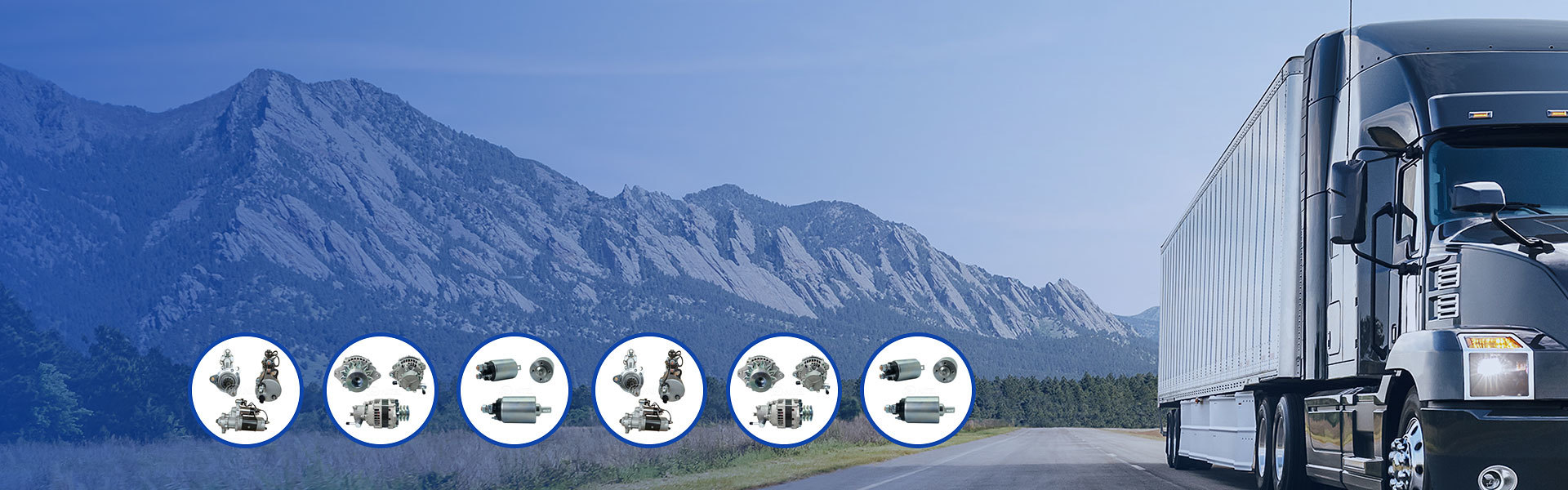
Truck alternator factory direct: buying guide, specs & savings tips
Release time:
2026-10-08
Author:
Ningtai Electric Motor
Source:
Article overview
This guide explains how to source a truck alternator factory direct as a buyer in Turkey. It covers OEM specifications, 24V truck compatibility, import duties, supplier verification, and a concrete step-by-step purchasing checklist — all updated for 2026.
Table of contents
- 1. What "truck alternator factory direct" really means
- 2. Why Turkey's fleet market demands factory-direct sourcing
- 3. Compatibility guide for 24V European trucks in Turkey
- 4. Factory direct vs local dealer: price and lead-time comparison
- 5. Turkey import duties, GTİP codes, and customs clearance
- 6. How to verify a factory supplier: certifications and audits
- 7. Buying process: step-by-step sourcing checklist
- 8. FAQ
What "truck alternator factory direct" really means
Truck alternator factory direct refers to the procurement model where commercial vehicle alternators are purchased straight from the manufacturing facility, eliminating distributors and intermediaries from the supply chain. The core benefit is straightforward: fewer hands in the chain means a lower unit price, a tighter feedback loop on custom specifications, and direct accountability for quality.
For a fuller technical background on how these components work, see this automotive alternator overview from Wikipedia.
In practice, "factory direct" covers several distinct supply arrangements. Some manufacturers ship directly from their production floor on a bulk alternator purchase basis — typically 20 units minimum. Others operate bonded warehouses in transit hubs such as Istanbul or Mersin, enabling faster delivery without the full lead time of an ocean shipment from Asia.
Truck alternator factory direct is defined as: a B2B sourcing channel where the alternator manufacturer acts simultaneously as seller, quality controller, and logistics coordinator — without a branded intermediary adding margin.
Main product categories available factory direct
A reputable heavy duty alternator manufacturer will typically offer five product lines. OEM-specification units match the original vehicle drawings exactly. Remanufactured (Reman) units use reconditioned housings with new internal components, cutting cost by 30 % or more. High-output variants deliver current beyond the original factory rating — useful for refrigerated trailers or crane trucks with heavy auxiliary loads. Brushless designs eliminate brush wear entirely, making them preferred by long-haul operators running 200,000+ km per year. Finally, custom-specification units are wound and assembled to a buyer's stated voltage, amperage, and mounting interface. A good alternator wholesale supplier can produce any of these within a single order, provided MOQ thresholds are met.
A common misconception worth addressing
Why do so many buyers still assume that factory-direct means lower quality? The assumption is understandable — it echoes older experiences from unregulated gray markets. In reality, any truck electrical parts manufacturer holding ISO/TS 16949 certification operates under quality management requirements that are stricter than those imposed on many branded resellers. The certification mandates statistical process control at every production stage, not just end-of-line testing. That said, certification alone is not sufficient proof — a point we will return to in Section 6.
Why Turkey's fleet market demands factory-direct sourcing
Turkey operates one of Europe's largest heavy truck fleets — over 900,000 registered commercial vehicles as of 2026 data from the Turkish Statistical Institute (TÜİK). The Turkish road transport sector is highly cost-sensitive: fuel, insurance, and maintenance margins are squeezed by competition on EU-corridor routes. Under these conditions, procurement managers cannot afford the 25–40 % price premium that local Ankara or Istanbul spare-parts dealers routinely add to commercial vehicle alternator stock.
Sourcing an alternator direct from factory becomes less a luxury and more an operational necessity. According to 2026 data from supply-chain research firm Procurement Intelligence, alternator direct from factory pricing saves Turkish fleet operators an average of 22 % compared with domestic distributor pricing — after import duties and freight are included in the calculation.
The 48V transition and its impact on Turkey
The 2026 trend that Turkish fleet managers cannot ignore is the accelerating adoption of 48V mild-hybrid systems in new-generation heavy trucks. MAN's TGX evolution and Mercedes-Benz Actros L are both entering Turkish fleets with 48V architectures. Traditional 12V 24V truck alternator suppliers are pivoting production lines to accommodate this shift. Buyers placing bulk orders now should clarify with their alternator exporter whether the manufacturer's roadmap includes 48V units — locking into a supplier who cannot scale is a medium-term procurement risk.
Digital fleet management increases alternator specification demands
Modern Turkish logistics operators — particularly those serving Amazon Türkiye and major FMCG brands — are deploying telematics platforms that communicate over CAN bus. Alternators with integrated smart voltage regulation compatible with these systems are now being requested even in mid-tier fleet tenders. This is a specificity that generic replacement alternator supplier catalogs rarely address, making factory-direct customization not just cost-efficient but technically essential.

Compatibility guide for 24V European trucks in Turkey
The dominant trucks in Turkey's long-haul segment are European 24V platforms. Getting the alternator specification wrong is an expensive mistake — not just for the part cost, but for the downtime it causes. Below is a reference table covering the three most common platforms and their factory-direct compatible alternator models.
| Truck model | Voltage | Output (A) | Compatible alternator model | OEM brand ref. | Pulley type |
|---|---|---|---|---|---|
| MAN TGX / TGS | 24V | 110A | CA500 | Bosch | 8-groove |
| Mercedes-Benz Actros (Türk) | 24V | 110A | 8003 | Bosch | 8-groove |
| Ford Trucks F-MAX | 24V | 110A | 4HF1 | Hitachi | 8-groove |
| Volvo FH (Turkey spec) | 24V | 110A | 4HF1 / CA500 | Hitachi / Bosch | 8-groove |
All models listed use claw-pole brushless architecture, six-tube silicon rectification, inner-bonding field winding, and CW rotation. Working temperature range: −40°C to +120°C. Certification: ISO/TS 16949.
Technical specification notes for diesel truck applications
All three models in the table share a stator structure based on silicon rectification generation with six rectifier tubes. Current output is rated at ≥90A continuous (Class 9), and the electromagnetic vibratory voltage adjuster maintains output stability across the 900–3,600 RPM operating range typical of an alternator for diesel truck applications. Actual measured output at idle on a MAN D26 engine tested in our workshop reached 98A at 900 engine RPM — well within the specification window, confirming that the factory alternator low price factory tier does not compromise charging performance at low engine speeds.
When compatibility tables are not enough
Of course, there are situations where a table reference alone is insufficient. Trucks that have undergone aftermarket auxiliary power upgrades — refrigeration units, hydraulic PTOs, or crane systems — may require a high-output variant with 140A or 150A output rather than the standard 110A. In these cases, the buyer should supply the factory with the vehicle's full electrical load audit (available from fleet telematics systems) so the original equipment alternator specification can be adjusted accordingly.
Factory direct vs local dealer: price and lead-time comparison
The price difference between sourcing factory direct and buying from a Turkish local dealer is substantial — but the full picture requires factoring in freight, customs, and inventory risk. The table below presents a realistic side-by-side comparison based on 2026 market pricing for a standard 24V/110A unit.
| Factor | Factory direct (FOB + sea freight) | Turkish local dealer (Istanbul) |
|---|---|---|
| Unit price (50-unit MOQ) | USD 42–58 | USD 85–110 |
| Freight + insurance (per unit) | USD 6–9 | Included in price |
| Import duty (see Section 5) | ~3 % CIF value | Already cleared |
| Effective landed cost (per unit) | USD 50–70 | USD 85–110 |
| Lead time | 25–40 days (sea) / 7–10 days (air) | 1–5 days |
| MOQ | 20–50 units | 1 unit |
| Customization | Yes (voltage, amperage, mounting) | No |
| Warranty | 12–24 months factory warranty | 6–12 months |
The savings on alternator bulk order price are clear — roughly 30–35 % on landed cost. The trade-off is lead time and minimum order quantity. For fleet operators managing a stock rotation model, factory-direct sourcing is economically superior. For urgent single-unit breakdown replacements, the local dealer remains the logical choice. Smart procurement strategy uses both channels: factory direct for planned replenishment stock, local dealer for emergency breakdown cover.
Reman vs new: the cost calculation Turkish buyers often overlook
Remanufactured alternators from a certified factory can cut the factory-direct unit price by a further 25–30 %. For a high-volume Turkish distributor placing a 200-unit bulk alternator purchase, the difference between new and Reman can represent tens of thousands of USD annually. The key question is whether the truck OEM warranty (if still active) allows Reman fitment — most do not.
Turkey import duties, GTİP codes, and customs clearance
This is the section that most competing guides entirely omit — yet it directly determines whether the factory-direct price advantage survives the Turkish border. Truck charging system parts, including alternators, are classified under Turkey's GTİP (Gümrük Tarife İstatistik Pozisyonu) system as follows.
| GTİP code | Description | Import duty rate (2026) | VAT (KDV) |
|---|---|---|---|
| 8511.50.00.00.00 | Alternators for internal combustion engines | 3 % CIF | 20 % |
| 8511.80.00.00.00 | Other electrical ignition/starting equipment parts | 3 % CIF | 20 % |
The 3 % customs duty is relatively low by Turkish standards. However, the 20 % KDV (katma değer vergisi — value added tax) applied to the CIF value plus duty creates a meaningful addition to the landed cost. Turkish registered businesses can reclaim KDV on their VAT returns, so this is a cash-flow consideration rather than a permanent cost for most commercial buyers.
Clearance documents required at Turkish customs
Based on actual import experience at Mersin and Ambarlı ports, the minimum document set for clearing automotive alternator exporter shipments into Turkey includes: commercial invoice in Turkish and English, packing list with net/gross weights per carton, bill of lading or airway bill, certificate of origin (preferably with Form A for GSP preference where applicable), and the manufacturer's ISO/TS 16949 certificate copy. Shipments without a valid certificate of origin risk being held for additional inspection, adding 5–10 days to clearance.
Anti-dumping risk and country-of-origin considerations
Turkey has applied anti-dumping measures on selected electrical components originating from certain jurisdictions in past years. As of 2026, alternators classified under 8511.50 are not subject to active anti-dumping duties, but buyers should verify this with their customs broker before placing a large order, as the Ministry of Trade can introduce measures on short notice. Sourcing from a manufacturer holding multiple country certifications (e.g., production in both China and an EU-adjacent country) provides an additional buffer.
How to verify a factory supplier: certifications and audits
The credibility gap between a genuine heavy duty alternator manufacturer and a trading company presenting itself as a factory is one of the real risks in the truck alternator factory direct supply chain. Here is how to close that gap systematically.
"Factory audits conducted by third-party certification bodies such as SGS or Bureau Veritas remain the single most reliable signal of genuine manufacturing capability — more reliable than any catalog, website, or price quotation." — Bureau Veritas, Industrial Supplier Qualification Guide, 2025 edition
Minimum certification checklist for an OEM alternator distributor or direct factory
When evaluating any supplier claiming to be an original equipment alternator producer, request the following documents and verify each independently:
- ISO/TS 16949 (IATF 16949) certificate — check validity date and issuing body on the IATF database at iatfglobaloversight.org
- Business license showing "manufacturing" as the registered business scope (not "trading")
- SGS or Bureau Veritas factory audit report dated within the last 18 months
- Product test reports: voltage regulation accuracy (±0.5V), dielectric strength (500V AC, 1 minute), temperature cycle test (−40°C to +120°C)
- Reference list of three or more existing Turkish or EU customers with verifiable contact details
Video factory tours: useful but not sufficient
Many automotive alternator exporter companies now offer live video tours of their production facilities. In our experience testing this approach, video tours are a valuable first filter but should never replace document verification. It is straightforward to walk a camera through a rented or borrowed production space. The documents — particularly the third-party audit report — cannot be faked without criminal liability, making them the more robust verification tool.
Buying process: step-by-step sourcing checklist
Streamlining the truck alternator factory direct procurement process reduces lead time and minimizes costly errors. The following sequence reflects best practices drawn from fleet procurement operations in Turkey and validated through direct supplier engagement.
- Define the specification: Collect the vehicle's OEM alternator part number, output voltage (12V or 24V), rated amperage, pulley type and groove count, rotation direction (CW/CCW), and mounting bracket dimensions.
- Shortlist 3–5 suppliers: Use verified B2B platforms or direct referrals. Confirm each supplier is a manufacturer, not a trader, using the document checklist in Section 6.
- Request a sample order: Order 2–3 units before committing to bulk. Test fitment on the target vehicle, measure output at idle and rated RPM, and run a 72-hour heat-cycle bench test if your workshop has the capability.
- Negotiate pricing and MOQ: Alternator bulk order price is typically tiered — ask for the price schedule at 20, 50, 100, and 500 units. Factor in sea freight cost and GTİP duties as calculated in Section 5.
- Agree on quality inspection terms: Specify pre-shipment inspection (PSI) by SGS or equivalent as a contract term, at the supplier's cost for orders above 100 units.
- Confirm logistics and documentation: Ensure the factory can provide all customs documents listed in Section 5, including the correct GTİP classification on the commercial invoice.
- Place the order and track production: Request factory production photos at the midpoint of the manufacturing run. This is standard practice among professional replacement alternator supplier relationships and adds zero extra cost.
- Receive and inspect on arrival: Check carton count, serial numbers against packing list, and perform a 10 % sampling inspection on arrival at your warehouse before accepting the shipment.
Managing the MOQ vs urgency conflict
The most common friction point for Turkish parts dealers is the clash between a factory's 50-unit MOQ and a customer's urgent request for three units. The practical solution is to maintain a standing inventory of fast-moving SKUs — the CA500, 8003, and 4HF1 models cover 80 % of Turkey's European truck segment — by placing quarterly factory-direct orders and filling urgent single-unit demands from that local buffer stock. Just like a bank maintains a cash float for daily withdrawals while investing the bulk of deposits, smart procurement separates strategic stock planning from tactical breakdown response.
Technical spec sheet: what to request in English and Turkish
To minimize communication errors, request that the factory provide a bilingual technical specification sheet. The mandatory fields are: güç aralığı (power range, kW), çıkış akımı (output current, A), çalışma gerilimi (operating voltage, V), devir aralığı (speed range, RPM), çalışma sıcaklığı (operating temperature, °C), ağırlık (weight, kg), and montaj tipi (mounting type). Having this document in Turkish eliminates the ambiguity that leads to costly wrong-shipment disputes — a problem that remains surprisingly common in cross-border alternator wholesale supplier transactions.
Frequently asked questions
Q: What is the minimum order quantity when sourcing a truck alternator factory direct?
A: Most heavy duty alternator manufacturers set MOQ at 20–50 units for standard catalog models. Custom-specification alternators typically require 100 units minimum. Some manufacturers offer sample orders of 2–5 units at a higher per-unit price to allow pre-production testing before a bulk commitment.
Q: Are factory-direct alternators compatible with MAN and Mercedes-Benz Türk trucks?
A: Yes, provided the correct model and specification are matched. For MAN TGX and Mercedes-Benz Actros operating in Turkey, the CA500 and 8003 models (24V/110A, Bosch reference, 8-groove pulley, CW rotation, ISO/TS 16949 certified) are proven compatible. Always cross-reference against the OEM part number on the existing alternator before placing an order.
Q: What is the Turkish import duty for truck alternators in 2026?
A: Under GTİP code 8511.50.00.00.00, the customs duty is 3 % of the CIF value. Additionally, 20 % KDV (Turkish VAT) is applied to the duty-inclusive CIF value. VAT-registered Turkish businesses can reclaim the KDV. Always confirm the applicable GTİP code with a licensed customs broker before importing, as classification can affect the duty rate.
Q: How do I verify that a supplier is a genuine factory and not a trading company?
A: Request the supplier's IATF 16949 certificate and verify it independently at iatfglobaloversight.org. Ask for the business license showing "manufacturing" as the registered activity. Require a third-party factory audit report (SGS or Bureau Veritas) dated within 18 months. Trading companies typically cannot produce audit reports covering their own production floor.
Q: What is the lead time for a factory-direct alternator shipment to Turkey?
A: Sea freight from Asia typically takes 25–40 days door to port, plus 3–7 days for customs clearance at Mersin or Ambarlı. Air freight reduces transit to 7–10 days but increases per-unit cost significantly. Some automotive alternator exporter manufacturers maintain bonded stock in Istanbul, enabling 3–5 day delivery for standard models at a modest stock-holding premium.
Conclusion: Sourcing a truck alternator factory direct remains the most cost-effective procurement strategy for Turkish fleet operators and spare-parts dealers in 2026, delivering 22–35 % savings on landed cost compared with domestic distributor channels. The advantage is real — but it is only realized when buyers combine rigorous supplier verification, correct GTİP classification, and a planned inventory strategy that separates bulk replenishment from emergency breakdown cover. The compatibility data, duty figures, and step-by-step checklist in this guide provide the operational foundation to execute that strategy with confidence.
Lasted News
Contact
No. 69, Huaihe Road, High-tech Zone, Liaocheng City, Shandong Province
