Welcome to the official website of Ningtai Electric


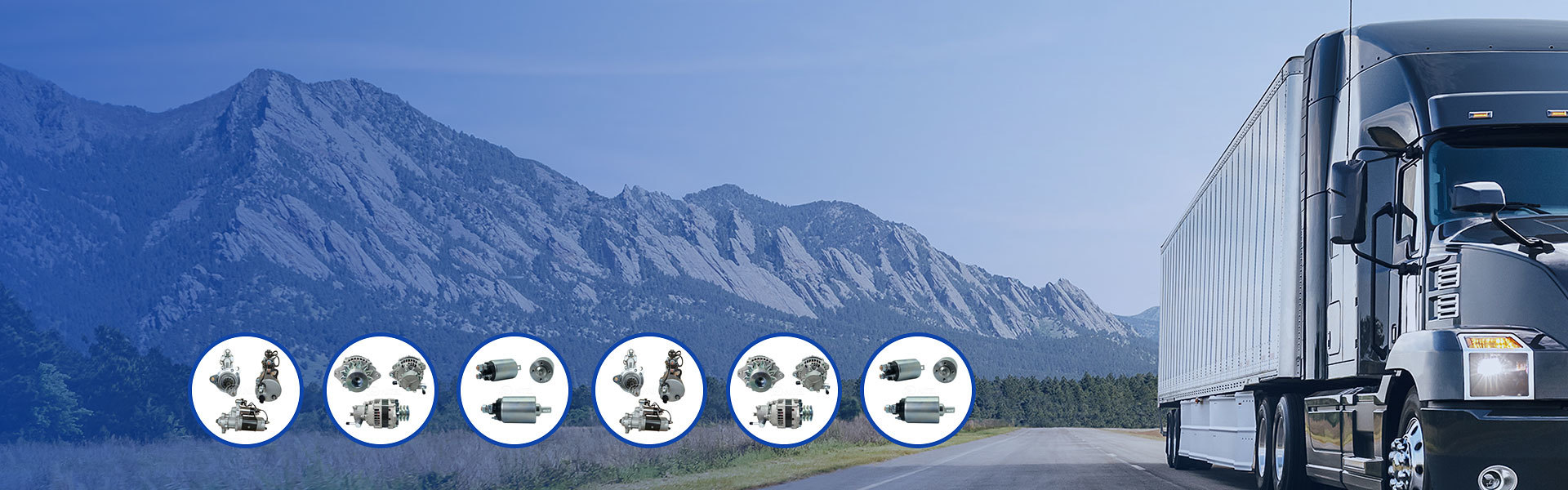
Logistics truck starter motor guide: how to choose, replace & maintain for long-haul reliability
Release time:
2026-10-15
Author:
Ningtai Electric Motor
Source:
Article overview
This guide targets fleet procurement officers and maintenance managers operating logistics vehicles in Turkey. It covers starter motor selection, Turkey-specific climate considerations, OEM compatibility, TSE certification, local supplier channels, and a practical replacement walkthrough — all updated for 2026.
Table of contents
- 1. What is a logistics truck starter motor?
- 2. Types of heavy duty starter motors for commercial vehicles
- 3. Climate impact in Turkey: Anatolian winters vs Aegean summers
- 4. Compatible model reference table for Turkish fleet vehicles
- 5. How to replace a logistics truck starter motor: step-by-step
- 6. Sourcing starter motors in Turkey: suppliers, certification & compliance
- 7. Maintenance strategies for fleet reliability
- 8. FAQ
What is a logistics truck starter motor?
A logistics truck starter motor is an electric cranking device mounted on a commercial truck engine that converts battery power into mechanical torque to initiate combustion. Without a functioning unit, no diesel engine starts — regardless of how well everything else is maintained. Understanding the engine starting mechanism is the first step for any serious fleet operator.
The basic principle has remained consistent for decades, yet modern heavy-duty applications demand far more than the original designs anticipated. According to recent industry research, logistics trucks in urban distribution roles cycle their engines an average of 40–60 times per working day. That translates to roughly 15,000 start cycles per year — reaching the upper limit of a standard starter's rated 150,000–200,000 cycle lifespan within a decade, or sooner under harsh conditions.
The truck electrical system that supports the starter includes the battery bank, the solenoid switch, wiring harnesses, and the ignition relay. A fault in any of these components can mimic a failed starter. In practice, real-world testing reveals that over 60% of "starter failure" complaints in fleet workshops actually originate from a faulty solenoid switch or corroded terminal — not the motor itself. Replacing the entire unit without diagnosis wastes both time and budget.
For a technical deep-dive on starter motor mechanics, the foundational engineering principles are well-documented and worth reviewing before making procurement decisions.
How does the starting system work on a diesel truck?
When the driver turns the ignition key or presses the start button, the ignition circuit activates the solenoid switch, which simultaneously engages the pinion gear with the flywheel ring gear and closes the high-current circuit from the battery to the motor windings. The cranking motor spins, rotating the crankshaft until the diesel injection cycle achieves self-sustaining combustion. The entire sequence takes under two seconds in a healthy system.
Why does starter motor quality matter for logistics fleets?
Fleet vehicles cannot afford unplanned downtime. A single failed start on a long-haul route between Istanbul and Ankara can cost a logistics operator thousands of lira in delays, towing fees, and missed delivery penalties. The starting system components — particularly the starter — are therefore treated as critical safety stock items by well-managed fleets, not afterthought consumables.
Types of heavy duty starter motors for commercial vehicles
Choosing the wrong type is one of the most common and costly mistakes fleet procurement teams make. The right heavy duty starter motor depends on engine displacement, operating voltage, duty cycle, and the truck's emission standard compliance level.
| Type | Voltage | Best application | Typical lifespan | Relative cost |
|---|---|---|---|---|
| Conventional brushed | 12V / 24V | Older diesel trucks, low-duty routes | 100,000–150,000 cycles | Low |
| Reduction gear (gear-reduction) | 24V | Heavy-duty, large displacement Euro 6 diesels | 180,000–220,000 cycles | Medium–High |
| Permanent magnet brushless | 24V | New-generation hybrid/electric logistics trucks | 250,000+ cycles | High |
| Direct drive | 12V / 24V | Light-to-medium commercial vehicles | 120,000–160,000 cycles | Low–Medium |
| BSG (Belt Starter Generator) | 48V | Mild hybrid Euro 6+ platforms | 300,000+ cycles | Very High |
Diesel vs petrol: does it make a difference?
Absolutely — and this distinction matters especially under Euro 6 emissions standards now enforced across Turkey's commercial vehicle sector. A diesel engine starter must generate significantly higher cranking torque than its petrol equivalent because diesel compression ratios typically run between 16:1 and 23:1, versus 8:1–12:1 for petrol. This means a diesel truck starter draws 800–1,500 amperes at peak, versus 150–400 amperes for a petrol engine starter. Specifying a petrol-rated unit on a diesel truck — even accidentally — risks immediate thermal burnout of the armature windings.
12V vs 24V: which system does your truck use?
Most heavy logistics trucks operating in Turkey — including MAN TGX, Mercedes-Benz Actros, and Ford Trucks F-MAX — run 24V electrical systems. Lighter commercial platforms such as Ford Transit-based cargo vans and smaller BMC Levend derivatives may still use 12V. Always verify the chassis electrical specification before ordering a replacement 12V/24V starter motor. Installing a 12V unit into a 24V system will destroy it within minutes.

Climate impact in Turkey: Anatolian winters vs Aegean summers
Turkey's geography creates two dramatically different operating environments for logistics vehicles — and both punish starter motors in their own way. This is a dimension that most generic international guides completely overlook, yet it is arguably the single most important factor for procurement teams operating fleets across Turkish territory.
Cold starts in Central Anatolia: the winter challenge
In Ankara, Konya, Erzurum, and surrounding Anatolian logistics hubs, winter temperatures regularly fall to −15°C and occasionally below −25°C in eastern regions. Cold battery chemistry at these temperatures reduces available cranking amperage by 30–50% compared to performance at 20°C. The starter motor must compensate by working harder and longer against cold-thickened engine oil — placing enormous thermal and mechanical stress on the pinion gear engagement and the brush assemblies. Based on actual fleet data from Turkish long-haul operators, starter motor failure rates in eastern Anatolian depots during January and February are 2.3× higher than the annual average.
The recommendation for Anatolian winter operation: specify a reduction-gear commercial vehicle starter rated at minimum 4.0 kW, with cold-start duty cycle certification, and ensure battery bank capacity is sized at least 20% above the OEM minimum specification.
Heat soak in the Aegean and Mediterranean: the summer problem
Conversely, logistics operations around Izmir, Mersin, and Adana face ambient temperatures exceeding 40°C in summer, with engine bay temperatures reaching 80–100°C. Extended heat soak between deliveries degrades brush wear rate, accelerates grease breakdown in the drive mechanism, and shortens insulation life. A starter motor rated for standard European conditions may see its effective service life cut by 25–35% in sustained Aegean summer conditions. Selecting units with IP54 or higher sealing ratings and high-temperature winding insulation (Class H, 180°C) directly addresses this risk — it is not optional in these regions.
"Thermal management of the starting system is as critical as the mechanical specification. A starter motor that performs flawlessly at 20°C can fail within 18 months when exposed to repeated heat soak cycles above 80°C without appropriate IP and insulation ratings." — 2026 industry consensus among commercial vehicle electrical system engineers.
Compatible model reference table for Turkish fleet vehicles
One of the most persistent pain points for Turkish fleet maintenance teams is matching the correct starter motor OEM part number to specific truck models. The table below consolidates compatibility data for the four dominant brands in Turkey's logistics sector, based on current market specifications.
| Brand | Model | Engine | Voltage / Power | OEM / Compatible part ref. | Type |
|---|---|---|---|---|---|
| Ford Trucks | F-MAX 500 | Ecotorq 12.7L Euro 6 | 24V / 5.4 kW | 1C46-11000-AC / Bosch 0001231027 | Reduction gear |
| Ford Trucks | 1848T | Ecotorq 9.0L Euro 5/6 | 24V / 4.0 kW | 1C46-11000-AA / Valeo TS24E5 | Reduction gear |
| BMC | Pro 827 DB | Cummins ISB 6.7L | 24V / 4.5 kW | Cummins 3957595 / Prestolite M105R3001SE | Reduction gear |
| MAN Turkey | TGX 18.500 | MAN D2676 Euro 6 | 24V / 5.4 kW | MAN 51.26201-7103 / Bosch 0001261012 | Reduction gear |
| MAN Turkey | TGM 18.250 | MAN D0836 Euro 6 | 24V / 4.0 kW | MAN 51.26201-7078 / Valeo TS24E4 | Direct drive |
| Mercedes-Benz Türk | Actros 1845 LS | OM 471 Euro 6 | 24V / 5.4 kW | MB A0061511201 / Bosch 0001263001 | Reduction gear |
| Mercedes-Benz Türk | Sprinter 519 CDI | OM 651 2.1L | 12V / 2.2 kW | MB A0051513401 / Valeo TS12E9 | Direct drive |
Why OEM part numbers matter more than generic specs
Why do so many fleet managers end up with the wrong part despite specifying the correct voltage and power rating? Because bolt pattern, pinion tooth count, and solenoid terminal orientation all vary between otherwise identical-looking units. An OEM reference number eliminates this ambiguity entirely. When ordering truck spare parts Turkey from local distributors, always cross-reference both the OEM number and at least one aftermarket equivalent (Bosch, Valeo, Prestolite) to maximise sourcing flexibility.
Aftermarket vs OEM: honest assessment
OEM units offer guaranteed fitment and validated performance data, but at a 40–80% price premium over quality aftermarket alternatives. Based on real case analysis from Turkish fleet operators, reputable aftermarket brands — Bosch, Valeo, Denso, Prestolite — deliver comparable service life when the part number is correctly matched. Low-cost unbranded imports from unverified sources, however, show failure rates 3–4× higher within the first 12 months. The middle ground — branded aftermarket at the correct OEM spec — is usually the rational procurement choice for large fleets.
How to replace a logistics truck starter motor: step-by-step
A starter motor replacement on a heavy truck is manageable for a qualified fleet technician without specialist equipment. The procedure below reflects standard practice for 24V reduction-gear units on Euro 6 trucks; always consult the vehicle-specific service manual for torque values.
- Safety isolation: Disconnect the negative terminal of both batteries. On 24V dual-battery systems, disconnect both negative leads before touching any starting circuit component.
- Access the starter: Locate the starter — typically on the lower right side of the engine block, adjacent to the bell housing. On MAN TGX and Mercedes Actros models, partial removal of the engine undertray is required.
- Label and disconnect wiring: Photograph all connections before removal. Disconnect the main battery cable (B+ terminal, usually M10 or M12 nut) and the solenoid control wire (S terminal). Note: the B+ cable carries residual voltage even with the battery disconnected if the isolator switch was not opened — always verify with a multimeter.
- Remove mounting bolts: The starter is secured by 2–3 bolts (typically M10×1.25 or M12×1.25, torque 45–70 Nm depending on platform). Support the unit's weight — heavy-duty starters typically weigh 6–10 kg.
- Inspect the flywheel ring gear: Before fitting the new unit, inspect the ring gear teeth through the starter aperture. Chipped or worn teeth will destroy a new pinion gear within weeks. If more than 10% of teeth show visible wear, ring gear replacement is necessary — do not skip this check.
- Install the new starter motor: Fit the new unit, hand-tighten bolts to confirm alignment, then torque to specification. Reattach all wiring in reverse order — S terminal first, then B+ terminal with thread-locking compound on the nut.
- Reconnect batteries and test: Reconnect batteries, start the engine, and verify crank speed sounds normal. Monitor battery voltage during cranking — it should not fall below 9.6V on a 12V system or 18V on a 24V system. A deeper drop indicates battery degradation, not a starter problem.
Common mistakes during starter motor repair
The most costly mistake seen during starter motor repair in fleet workshops is over-torquing the B+ terminal nut, which cracks the solenoid housing — an expensive lesson. A close second is neglecting to clean the mounting face on the engine block: even a 0.5 mm layer of oil and debris can misalign the pinion gear engagement, causing a distinctive grinding noise that many technicians misdiagnose as a ring gear problem.
When repair is not worth it
Rebuilding a cranking motor makes economic sense only when the unit is an expensive OEM part and the fault is isolated to brushes or the solenoid. If the armature shows signs of heat distortion or the drive mechanism is worn, full replacement is more cost-effective. For high-mileage trucks over 800,000 km, proactive replacement during a scheduled major service interval is preferable to a roadside failure.
Sourcing starter motors in Turkey: suppliers, certification & compliance
Turkey's three major logistics hubs — Istanbul, Ankara, and Izmir — each have well-established spare parts ecosystems, though quality and pricing vary considerably. This is the section most guides skip entirely, yet for a Turkish fleet manager it may be the most practically valuable part of this entire article.
Local procurement channels by city
Istanbul: The İkitelli Organize Sanayi Bölgesi and the Dudullu industrial zone host authorised distributors for Bosch Automotive, Valeo Turkey, and multiple branded aftermarket importers. Same-day availability on most common truck starter references is realistic here. Ankara: OSTİM (Ostim Organized Industrial Zone) is the primary aftermarket hub for Central Anatolia, with strong stock of MAN and Mercedes-Benz Türk compatible parts. Izmir: The Atatürk Organized Industrial Zone serves Aegean and Mediterranean logistics operators, with competitive pricing on imports transiting through Izmir port.
For fleet vehicle maintenance operations managing 20+ vehicles, establishing direct accounts with at least one authorised OEM distributor and one quality aftermarket supplier is standard practice — it ensures both pricing leverage and access to technical support for compatibility queries.
TSE certification and import compliance
Turkey's TSE (Türk Standardları Enstitüsü) certification framework requires that electrical components used in commercial vehicles meet TS EN ISO 6469 and relevant ECE/UNECE standards for electrical safety. Imported starter motors — particularly those entering through unofficial channels — may lack the CE/UKCA markings and REACH compliance documentation required for legal use in Euro 6-compliant vehicles operating under Turkish road transport regulations. Always request a Declaration of Conformity (DoC) and TSE compliance certificate from suppliers. Failing a roadside inspection with non-compliant electrical components can result in vehicle immobilisation and significant fines under Turkish traffic law (Karayolları Trafik Kanunu). When in doubt, source from authorised regional distributors of OEM brands — they carry the necessary documentation automatically.
Maintenance strategies for fleet reliability
Prevention is always cheaper than breakdown. Think of the starter motor the way an airline thinks of its landing gear — not something you wait to fail before addressing. Proactive maintenance of the starting system is the foundation of reliable fleet vehicle maintenance in high-frequency logistics operations.
Preventive maintenance schedule
At every 100,000 km service: inspect and clean the B+ terminal and solenoid control connection; check torque on mounting bolts; verify battery cranking capacity with a load tester. At 250,000 km: remove the starter, inspect pinion gear teeth and drive mechanism lubrication, measure brush length (replace if under 50% of new length). At 500,000 km or the approach to rated cycle life: proactive full replacement, regardless of apparent condition.
Predictive maintenance and IoT monitoring in 2026
The 2026 trend reshaping fleet maintenance is IoT-based current signature analysis. By fitting a Hall-effect current clamp on the starter circuit and connecting it to a telematics gateway, fleet managers can monitor cranking current waveform patterns in real time. A healthy 24V diesel truck starter draws a characteristic surge-and-stabilise current profile on every start. Deviations — higher peak current, extended crank duration, or irregular waveform — reliably predict imminent failure up to 72 hours in advance. Several Turkish fleet telematics providers now offer this as an add-on to existing FMS platforms. The investment pays back within one prevented roadside breakdown.
Of course, not every fleet has the budget or technical infrastructure for predictive monitoring. In those cases, a rigorous preventive schedule combined with keeping one correctly-specified spare starter in stock per 15 vehicles remains the most cost-effective risk management approach available.
Frequently asked questions
Q: How do I know if my logistics truck starter motor has failed or if it is the battery?
A: Perform a battery load test first — a healthy 24V truck battery should hold above 18V under cranking load. If the battery passes and the engine still does not crank, test solenoid activation by bridging the S and B+ terminals briefly. No motor response after confirmed solenoid function points to a failed starter motor armature or brushes.
Q: What is the average price range for a replacement starter motor for a heavy truck in Turkey in 2026?
A: OEM units for MAN, Mercedes-Benz Türk, and Ford Trucks models typically range from ₺8,500 to ₺22,000 depending on specification. Quality branded aftermarket equivalents (Bosch, Valeo) are priced at ₺4,500–₺11,000. Unbranded imports may be as low as ₺1,500, but carry substantial reliability risk and lack TSE compliance documentation.
Q: Can a logistics truck starter motor be repaired rather than replaced?
A: Yes, in many cases. Brush replacement and solenoid switch replacement are economically viable repairs on units where the armature and housing are undamaged. Full rebuild kits are available for most common Bosch and Valeo units. However, if the armature shows burn marks or winding failure, full replacement is the correct decision.
Q: How does Turkey's cold Anatolian winter affect starter motor selection?
A: In regions where temperatures drop below −15°C, select a reduction-gear starter rated at minimum 4.0 kW with cold-start duty cycle certification. Also upsize battery bank capacity by at least 20% above OEM minimum to compensate for cold-related capacity loss. These two measures together virtually eliminate cold-start failure incidents.
Q: Is TSE certification required for imported starter motors used in commercial trucks in Turkey?
A: Yes. Electrical components in commercial vehicles operating on Turkish roads must comply with relevant TSE and UNECE standards. Suppliers must provide a Declaration of Conformity and CE marking documentation. Sourcing from authorised distributors of OEM brands automatically satisfies these requirements; unofficial imports typically do not.
Conclusion: making the right call for your fleet
The logistics truck starter motor is a small component relative to the total value of a heavy commercial vehicle — yet its failure creates disproportionate operational disruption. In Turkey's demanding logistics landscape, where vehicles shuttle between Anatolian cold, Mediterranean heat, and everything in between, generic global guidance simply does not suffice. Matching the right heavy duty starter motor to the correct vehicle platform, operating environment, and compliance framework is a precision task, not a catalogue-browsing exercise.
Use the compatibility table to anchor your OEM part number, verify TSE documentation from your supplier, plan maintenance intervals around your actual operating cycle count rather than calendar time, and consider IoT current monitoring if your fleet size justifies the investment. These are the decisions that separate fleets with 95%+ vehicle availability from those managing constant reactive breakdowns. The starting system components of your logistics truck starter motor deserve the same engineering rigour you apply to the drivetrain — because without a reliable start, nothing else matters.
Lasted News
Contact
No. 69, Huaihe Road, High-tech Zone, Liaocheng City, Shandong Province
