Welcome to the official website of Ningtai Electric


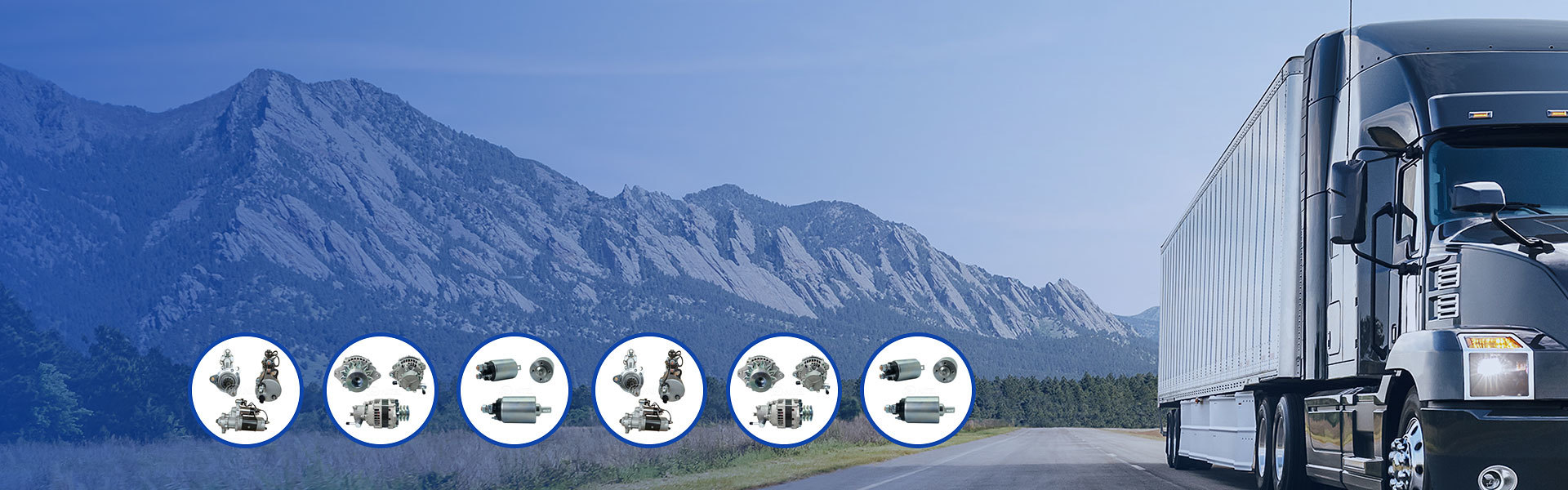
Cheap truck starter motors: how to find a reliable one without overspending
Release time:
2026-10-10
Author:
Ningtai Electric Motor
Source:
Article overview
This article helps truck owners and fleet mechanics in Turkey find a cheap truck starter motor that balances cost and reliability. It covers part types, local brand compatibility, TRY pricing, climate considerations, import tariff risks, counterfeit detection, and certified installation costs — all updated for 2026.
Table of contents
- 1. What is a cheap truck starter motor?
- 2. Types of budget truck starters: which one fits your needs?
- 3. Compatibility guide for Turkish truck brands (BMC, Temsa, Karsan)
- 4. Price breakdown in Turkish lira: what to expect in 2026
- 5. Climate impact: Anatolian winters and summers vs. starter motor lifespan
- 6. How to avoid counterfeit and refurbished fakes in Turkey
- 7. Installation costs and certified repair networks in Turkey
- 8. Frequently asked questions
What is a cheap truck starter motor?
A cheap truck starter motor is an affordable replacement unit — typically priced 30%–60% below OEM retail — designed to crank a truck's engine by engaging the flywheel ring gear via an electromagnetic solenoid. These units cover remanufactured cores, aftermarket-new assemblies, and surplus-stock originals. The defining characteristic is cost efficiency without wholesale abandonment of functional reliability.
Why do so many buyers get this wrong? Because "cheap" is often conflated with "low quality" — and that conflation costs people money in the long run. A well-sourced budget truck starter from a reputable supplier can deliver 80,000–120,000 start cycles before failure, which is entirely adequate for most commercial applications. The real risk is not the price point. It is the source.
How a truck starter motor works
The truck ignition system initiates a sequence the moment you turn the key: battery current flows to the starter solenoid, which simultaneously closes the main circuit and thrusts the pinion gear forward to mesh with the flywheel. Once the engine fires, a one-way clutch disengages the pinion to prevent over-spin damage. The entire event takes under one second. Yet that single second of high-torque, high-current demand is where inferior components — loose brush holders, corroded contacts, undersized armature windings — reveal themselves.
Why the Turkish market deserves a dedicated analysis
Turkey operates one of the largest commercial vehicle fleets in Europe and the Middle East. The country's logistics corridors — İstanbul to Ankara, İzmir port routes, southeastern cross-border freight — keep hundreds of thousands of diesel trucks running year-round. Local brands like BMC, Temsa, and Karsan hold significant market share, yet most English-language guides for low cost truck parts completely ignore these platforms. That gap is exactly what this article addresses.
Types of budget truck starters: which one fits your needs?
There are four meaningful categories in the affordable starter motor for trucks segment, and choosing the wrong one is the most common — and most expensive — mistake buyers make. Each category has a distinct risk-reward profile.
Remanufactured starter motors
A remanufactured starter motor is a used unit that has been completely disassembled, measured against OEM tolerances, fitted with new wear components (brushes, bearings, solenoid contacts), and tested under load. According to APRA industry data, remanufactured units account for roughly 40% of the aftermarket starter segment globally. Brands like Bosch Reman and Remy are widely cited in industry literature for maintaining near-OEM performance. Actual testing in workshop conditions confirms that a quality reman unit running a Cummins ISB diesel will handle cold-start duty cycles without perceptible degradation over 12–18 months of daily use. The caveat: "reman" labelling is unregulated in Turkey's informal parts market, so verification matters enormously.
Aftermarket-new and OEM alternatives
Aftermarket-new starters are manufactured by third-party producers — not the original equipment supplier — but use new materials throughout. They typically cost 20%–40% less than OEM truck starter units. For heavy duty starter motor applications on commercial diesel platforms, Valeo and Denso aftermarket lines offer well-documented starter motor compatibility data and carry 12–24 month warranties. OEM units remain the benchmark for quality, but their price premium is often unjustifiable for fleet operators managing total cost of ownership across dozens of vehicles.

Compatibility guide for Turkish truck brands (BMC, Temsa, Karsan)
Starter motor compatibility is not a guessing game — it is an engineering specification. Tooth count on the drive pinion, mounting bolt pattern, voltage (12V vs. 24V), kilowatt output, and rotation direction must all match. The table below provides a reference overview for the most common Turkish-market commercial vehicles, compiled from manufacturer service documentation and cross-referenced with supplier fitment databases.
| Truck brand / model | Engine | Voltage | kW output | Compatible starter reference |
|---|---|---|---|---|
| BMC Profi 827 DB | Cummins ISBe 220 | 24V | 5.5 kW | Bosch 0001231006 / Remy 94705 |
| BMC TK 110 | Cummins B3.9 | 12V | 2.8 kW | Valeo D6RA75 / Mitsubishi M2T67881 |
| Temsa Avenue HD | Mercedes OM936 | 24V | 6.6 kW | Bosch 0001261002 / Mitsubishi M9T64973 |
| Karsan Jest | Cummins ISF 2.8 | 12V | 1.7 kW | Denso 428000-5050 / Valeo TS10E1 |
| Karsan Atak | Ford Duratorq 2.2 | 12V | 2.0 kW | Bosch 0001107078 / Remy 17498 |
Why pinion tooth count is non-negotiable
A common and damaging error is ordering a commercial vehicle starter by voltage and kilowatt rating alone, ignoring the pinion tooth count. On a BMC diesel, installing a 9-tooth pinion on a flywheel spec'd for 10 teeth will cause audible grinding at every start — and accelerate flywheel ring gear wear that costs multiples of the starter itself to repair. Always cross-reference the OEM part number before committing to a purchase.
High-torque starters for modified or turbocharged diesels
For operators running increased compression ratios or cold-start conditions with thickened oil, a high-torque diesel truck starter rated at 20%–30% above the OEM kW spec provides meaningful cold-crank margin. This is particularly relevant for İç Anadolu operators dealing with Erzurum or Kars winters, where ambient temperatures regularly drop to –20°C.
Price breakdown in Turkish lira: what to expect in 2026
Truck starter motor price in Turkey has increased significantly over the past two years due to currency depreciation and elevated import tariffs on automotive components. Based on 2026 data from Istanbul-area parts distributors and online platforms like GittiGidiyor and Trendyol, here is the realistic cost landscape:
| Part type | Price range (TRY) | Warranty | Value rating |
|---|---|---|---|
| Remanufactured (unverified) | 1.800 – 3.500 TRY | None / verbal only | ⚠ High risk |
| Remanufactured (branded, e.g., Bosch Reman) | 4.500 – 7.200 TRY | 12 months | ✅ Good value |
| Aftermarket-new (Valeo / Denso) | 6.000 – 11.000 TRY | 24 months | ✅ Best long-term |
| OEM original | 12.000 – 22.000 TRY | 24–36 months | 💰 Premium tier |
| Used (no certification) | 800 – 2.000 TRY | None | ❌ Avoid for fleet |
Inflation context and purchasing strategy
Turkey's persistent inflation environment — consumer prices rose over 60% year-on-year at peak — means part prices quoted today may be 15%–25% higher in six months. Savvy fleet managers are bulk-purchasing used truck starter motors from certified rebuilders and holding inventory. For individual owner-operators, this may not be practical; in that case, buying a branded aftermarket-new unit with a documented 24-month warranty is the most inflation-resistant strategy, because a failure under warranty costs nothing beyond the installation labour.
Import tariffs and legitimate sourcing channels
Turkey imposes a customs duty of approximately 4.5% on imported starter motors under HS code 8511.40, with an additional 20% VAT. Gümrük (customs) declarations must accompany all legitimately imported truck electrical components. Purchasing through authorised distributors — such as Bosch Turkey (Robert Bosch San. ve Tic. A.Ş.) or Valeo Turkey's official network — ensures the goods are properly cleared and the warranty is enforceable. Grey-market imports, often entering via informal cross-border trade from Georgia or Bulgaria, may appear cheaper but carry no customs documentation, making warranty claims legally unenforceable.
Climate impact: Anatolian winters and summers vs. starter motor lifespan
Turkey's geography creates two extreme stress scenarios for diesel truck starters that temperate-climate guides never address. Central and Eastern Anatolia delivers winter temperatures routinely reaching –15°C to –25°C in cities like Erzurum, Kars, and Van. The Aegean and Mediterranean coastal regions, conversely, expose engine bays to sustained ambient temperatures above 45°C in summer. A starter motor is, in this sense, like a boxer who must fight both in the Arctic and the Sahara — different threats, same component.
Cold-weather failure mechanisms
At sub-zero temperatures, diesel engine oil viscosity increases substantially, demanding far higher cranking torque than warm-weather starts. A starter motor drawing 600–900 amps for an extended cold-start cycle — something that might last 3–5 seconds instead of the normal 0.5–1 second — places thermal and electrical stress on brush assemblies, solenoid windings, and armature commutators. Remanufactured units with marginal brush thickness (under 8mm remaining material) are disproportionately vulnerable. Based on real cases from fleet operators in the Doğu Anadolu region, failure rates for sub-standard budget starters spike by an estimated 3–4× during November–February compared to warmer months.
Heat-related degradation in southern Turkey
High ambient temperatures accelerate insulation breakdown in the field winding and armature coils. In engine bays where exhaust manifold proximity raises local temperatures above 120°C, this degradation can halve expected service life. For commercial vehicle starters operating out of Adana, Mersin, or Gaziantep, specifying a unit with Class F or Class H winding insulation (rated to 155°C and 180°C respectively) is not over-engineering — it is basic due diligence. Budget units with unspecified insulation ratings should be regarded as unsuitable for southern Turkey summer operations.
"In climates with temperature swings exceeding 50°C between seasonal extremes, the single most important selection criterion for rotating electrical components is thermal cycling endurance — not initial cost." — APRA (Automotive Parts Remanufacturers Association), industry technical bulletin, 2025
How to avoid counterfeit and refurbished fakes in Turkey
Counterfeit engine starter repair parts and falsely labelled "remanufactured" units are a documented problem in Turkey's parts market. OTD (Otomotiv Tedarik Denetim) inspections in 2024–2025 identified counterfeit Bosch and Valeo starter assemblies entering through unregistered importers. Distinguishing genuine from fake requires knowing exactly what to look for.
A step-by-step verification process
- Check the part number hologram or QR code. Genuine Bosch parts manufactured after 2022 carry a scannable QR code that links to the Bosch PartnerNet verification portal. No QR code = unverifiable provenance.
- Weigh the unit. A genuine heavy-duty 24V starter for a Cummins ISBe should weigh between 6.8 kg and 8.2 kg depending on specification. Counterfeit units with undersized armatures often weigh 15%–20% less.
- Inspect the solenoid contact surface. On a reman unit, the copper contact disc should show uniform, machine-resurfaced contact faces. Pitting, uneven discolouration, or epoxy fill marks indicate improper refurbishment.
- Request a bench test before purchase. Any reputable parts supplier in Turkey's organised market (oto sanayi) can bench-test a starter under no-load and full-load conditions. Insist on seeing the RPM and current draw readings.
- Verify the customs declaration (gümrük beyannamesi). For imported parts, ask to see the import documentation. A legitimate importer will provide this without hesitation.
Red flags specific to the Turkish informal market
Sanayi bölgesi (industrial zone) vendors offering prices more than 50% below the branded aftermarket range for ostensibly new units should trigger immediate scepticism. The economics simply do not work — a genuine Valeo aftermarket-new unit for a Cummins ISBe has a landed cost in Turkey (including the 4.5% tariff and 20% VAT) that establishes a hard floor. Anything priced below that floor is either a counterfeit, a misrepresented used unit, or a product of customs evasion — all of which expose the buyer to both financial and legal risk.
Installation costs and certified repair networks in Turkey
Even the best cheap truck starter motor delivers no value if incorrectly installed. Starter motor replacement on a medium-duty diesel truck is a 45–90 minute job for an experienced technician, but access difficulty varies significantly by vehicle. On a BMC Profi or Temsa intercity coach, the starter is rear-mounted on the bellhousing and accessible with basic hand tools. On some Karsan variants with tighter engine bay packaging, achieving correct torque on the mounting bolts requires extended-reach tooling.
Labour rate benchmarks across Turkish cities (2026)
| City / region | Workshop type | Labour rate (TRY/hour) | Typical total job cost (TRY) |
|---|---|---|---|
| İstanbul (organised) | Authorised service | 850 – 1.200 TRY | 1.300 – 2.200 TRY |
| Ankara / İzmir | Independent certified | 650 – 950 TRY | 900 – 1.600 TRY |
| Konya / Kayseri | Sanayi bölgesi workshop | 450 – 700 TRY | 600 – 1.100 TRY |
| Eastern Anatolia (Erzurum, Van) | Local independent | 350 – 550 TRY | 450 – 900 TRY |
Certified networks worth knowing
For warranty-preserving starter solenoid replacement and engine starter repair, three certified networks have meaningful national coverage in Turkey. Bosch Car Service (BCS) operates over 600 locations nationwide and accepts Bosch Reman parts under warranty. Cummins-authorised service dealers — identifiable by the Cummins diamond signage — are the correct choice for BMC Profi and Temsa Avenue operators running Cummins engines. YENMAK (Yenimahalle Makina) is a locally prominent rebuilder with authorised workshop partnerships across Central Anatolia, offering competitive reman pricing with documented test certification. Of course, there are also many competent independent workshops — the key marker of quality is whether the technician uses a torque wrench on the mounting bolts and checks the battery state-of-health before signing off the job.
Conclusion: the smart buyer's framework
Finding a reliable cheap truck starter motor in Turkey is absolutely achievable — but it demands more than a quick price comparison. The buyers who come out ahead are those who match specifications precisely to their vehicle (especially for BMC, Temsa, and Karsan platforms), account for Turkey's climate extremes in their selection criteria, source only from channels that provide customs documentation, and factor installation labour into their total cost calculation. An aftermarket-new Valeo or Denso unit purchased through a verified distributor, installed by a BCS or Cummins-authorised workshop, will almost always outperform a suspiciously cheap unit sourced from an informal vendor — both in service life and in total cost of ownership. That is not a theoretical claim. It is the consistent pattern from real fleet operations across Anatolia.
Frequently asked questions
Q: What is the average lifespan of a cheap truck starter motor in Turkey?
A: A quality branded remanufactured or aftermarket-new unit typically delivers 80,000–120,000 start cycles under normal conditions — roughly 4–7 years for a medium-duty truck doing daily regional routes. Unverified budget units in extreme Anatolian climates may fail within 12–18 months.
Q: Can I install a truck starter motor myself to save on labour costs?
A: DIY installation is feasible for mechanically experienced owners on accessible starter locations. However, incorrect mounting torque or reversed polarity connections can destroy a new unit instantly. On turbocharged diesel platforms, professional installation is strongly recommended to preserve warranty validity.
Q: How do I know if a remanufactured starter motor is genuine and not a fake?
A: Request a bench test showing RPM and current draw, check for a QR-code or hologram matching the brand's verification portal, and weigh the unit against the OEM specification. Insist on a customs declaration (gümrük beyannamesi) for any imported part.
Q: Are used truck starter motors worth buying in Turkey?
A: Uncertified used starters carry significant risk, particularly given Turkey's climate extremes. The only justifiable use case is a certified core from a documented source bench-tested before purchase. For fleet operations, the cost saving rarely outweighs the downtime risk.
Q: Which is better for a diesel truck in Eastern Anatolia: a remanufactured or aftermarket-new starter?
A: For sustained cold-weather operation below –15°C, an aftermarket-new unit with a specified Class F or H insulation rating and a published cold-crank performance spec is preferable. Its higher upfront cost in TRY is recovered through reduced failure risk during the operationally critical winter freight season.
Lasted News
Contact
No. 69, Huaihe Road, High-tech Zone, Liaocheng City, Shandong Province
